When David and Lauren Eastaugh’s devotion to the South African bush, capturing wildlife on film and narrating nature’s most unique stories collided, things just seemed to fall into place.
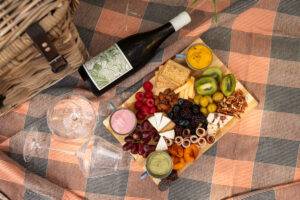
What initially started out as a conversation around a glass of wine quickly pivoted into a convincing pitch, resulting in the recent launch of Amaya and its in-house film course by Too Wild. Located in the Timbavati Private Nature Reserve – which forms part of the Greater Kruger – David and Lauren’s in-depth film course allows nature lovers to experience the African bush from a whole other perspective: from behind the lens. They host a number of 3-week-long wildlife filming courses throughout the year, encouraging nature enthusiasts to turn their passion for the African wild into cinematic art.
From the Telly to the Timbavati
Following a career at high-end resorts in the Maldives, where she worked as a Marine Biologist, Lauren’s career led her to becoming a wildlife television presenter, where she gave viewers her biological input, sharing her knowledge on different species. That took her to the Caribbean, where she worked as a Marine Expert – on television, but underwater. Finally, she landed a position as Wildlife Expert, still presenting live on television, but from behind the steering wheel of a game viewing vehicle. And that’s where she met David.
David’s been in the wildlife filmmaking industry for the past nine years and, as a couple, they have worked together for several of these nine years – him behind the camera and Lauren in front of it. They’ve come across all sorts of amazing wildlife sightings in different parts of Africa over the years and worked on numerous television shows – either solo or together – with WildEarth, Nat Geo, Nat Geo Wild, SABC, CGTN, Disney+, BBC and WWF. Naturally, this fuelled their devotion – not only to the bush, but also to each other.
A Barrier to Entry
Starting out in film, David worked on live TV shows and commercials. “I always had this idea of being part of the wildlife industry, but there really was no avenue to pursue. There are a lot of barriers to entry – one of them being access into a natural space; the other one getting your hands on the necessary equipment to build your portfolio,” he says. Having grappled with that himself, the aim is for Too Wild to ultimately serve as a solution to that.
Paying It Forward
In addition to solving this problem, the power couple has also taken a stance to sponsor one student from the surrounding communities per Too Wild film course. That way, they get to give back and inspire, allowing an enthusiastic and promising individual to learn about storytelling through film and bringing him or her one step closer to a professional career in the wildlife filming industry.
With students attending the wildlife filmmaking course from all over the globe and the group normally consisting of diverse backgrounds, cultures and ages, filmmaking is but one of the learnings you leave with at the end of the three weeks. At $10,750 per person, the course includes everything you might need – from accommodation, food and drink to game drives, mentorship, teaching and everything else. David says: “It’s a facility where everything is provided – the machines to edit your footage; eight different camera rigs for you to learn from; we use all sorts of stabilisers and macro lenses – really to arm you to the teeth as a wildlife filmmaker.”
Essentially, the only requirement for those enrolling is that they are devoted – as David and Lauren are – to the dream of filming wildlife.
A Different Kind of Safari
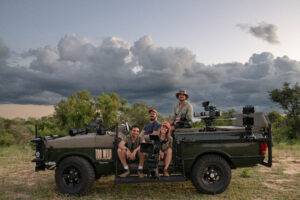
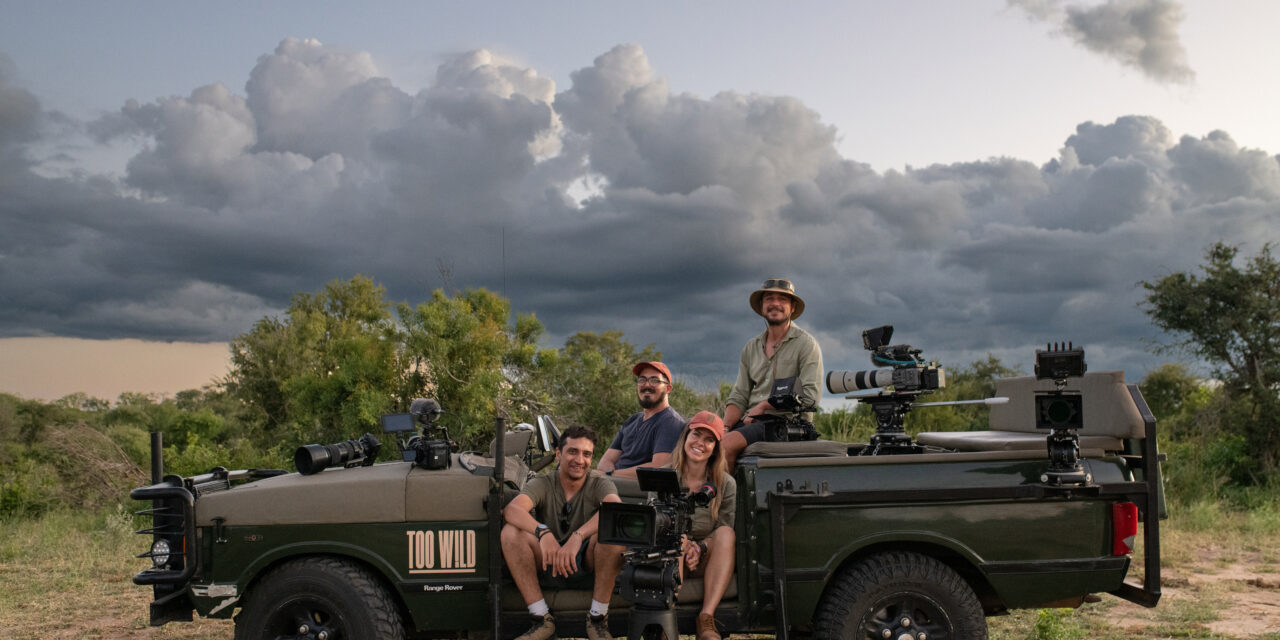
Going out into the wild for six hours every day – three hours in the morning and three late afternoon – looks a little different to what general lodge guests would experience. Students join their filmmaking mentors on Too Wild’s modified vehicles, specially transformed to accommodate filming equipment. This ultimately sets students up for success from the get-go. Back at the lodge, there is also an impressive equipment room and an editing suite where students can download, edit and create magic late into the night. The quality of these suites and their equipment echoes Lauren and David’s dedication to education in the wild.
At times, students might sit at a sighting for over an hour, trying to perfect their filming techniques and getting to grips with the equipment. A safari from behind the lens allows for a whole other perspective and the proof lies in the footage students collect for their portfolio work. David explains that one might not realise the obscene amount of time required to get worthwhile footage and that, in the end, that really is the focus of the Too Wild film course.
Devoted to the Task at Hand
Lectures and workshops are also peppered throughout the course. For instance, Too Wild works with a natural history editor who hosts editing workshops, reviews the students’ work and gives detailed feedback to get it up to a standard that she sees fit. Lauren also hosts some of the workshops, touching on animal behaviour, biology, ethics and phenomenology. Animal behaviour plays an integral part in the filming of wildlife, making her expertise invaluable. David or one of the other mentors also offers additional practical sessions, including the use of gimbals, macro sessions, rig maintenance, nighttime star lapses and more.
“We really start from basics to introduce people to film,” David says. Since no qualifications are required for the course, he adds that the first week is really the nuts and bolts of how a camera works, what to do with a tripod and what certain buttons do. “Of course, moving on from that, it’s composition, how to expose your camera – these are all sessions that take place over the space of three weeks.”
The final week of the course is mainly filled with editing and finalising the students’ portfolio pieces. According to David, a showreel is ultimately a filmmaker’s curriculum vitae: “It is two minutes of their best work; a piece of portfolio work that should – in theory – help you to further your career in the industry.”
Quiet Luxury That Fuels Creativity
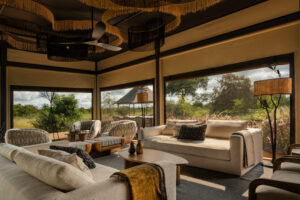
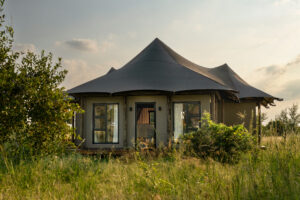
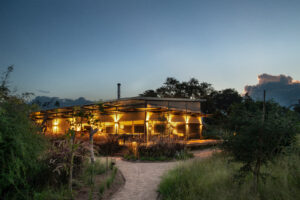
Amaya’s spacious, tented suites, pool and lounge area – built by Bushtech – only add to the immersive Too Wild wildlife filming experience. Built on the premise of quiet luxury, Lauren says the aim was to create a very organic, natural environment. “It’s very wild. We only built on existing footprints, so we haven’t put a building or a tent where there wasn’t something before.”
Whether you’re there for a luxurious safari stay or attempting a career as a wildlife filmmaker, the stay at Amaya is one of luxurious comfort and bushveld bliss. It brings with it an urgency of slowing down that can only fuel your creativity, ultimately resulting in some of the best stories – whether in the form of film or engraved in your mind as memories.
If you’re a wildlife and nature devotee, Amaya is the place to be.
By Renate Engelbrecht