The Swiss Confederation, also known as Confoederatio Helvetica, was founded when the three cantons of Uri, Schwyz, and Unterwalden formed an alliance to protect one another. This pact, formalised in the Federal Charter of 1291, is regarded as the foundation of modern Switzerland.
Although the Swiss nation state in its present form was established in 1848 with the adoption of a new constitution, the 1291 charter remains the symbolic beginning of Swiss nationhood. It is celebrated every year on 1 August as Switzerland’s National Day.
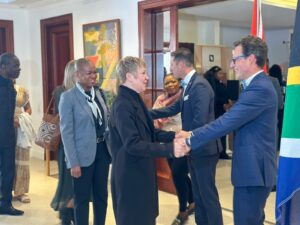
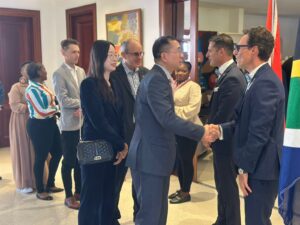
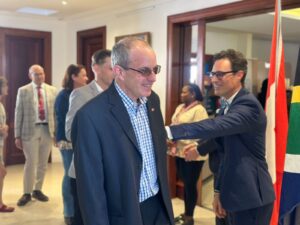
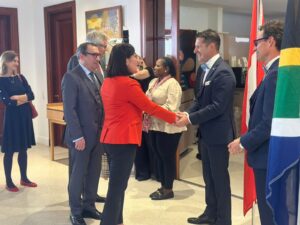
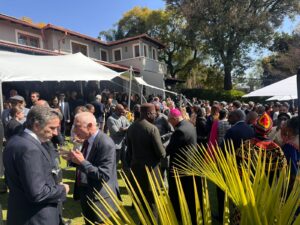
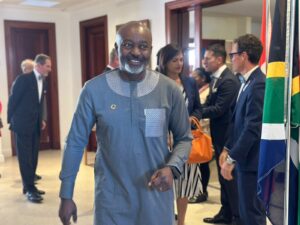
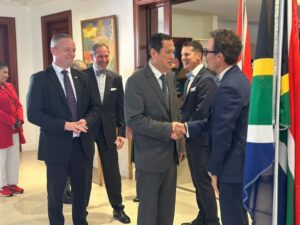
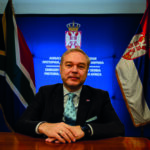
His Excellency Mr Mirko Manzoni welcomed guests to mark this remarkable milestone. He reflected on Switzerland’s evolution over the centuries, from a union of a few German-speaking mountain communities into a nation of diverse landscapes and four national languages. He noted that this multilingual identity is something Switzerland shares with South Africa, one of the few countries in the world that surpasses Switzerland in the number of official languages.
“Living together peacefully in diversity requires continuous commitment and constant effort,” said Mr Manzoni.
He recalled the words of a Swiss president more than a century ago: “In my opinion, it is the duty of every Swiss citizen to overcome what divides us and to cultivate what unites us.”
Congratulating South Africa on the formation of its new Government of National Unity, Mr Manzoni drew a parallel with Switzerland’s own history. After the establishment of the modern federal state in 1848, it took more than forty years before a second political party was included in government, and another sixty-seven years before all major parties were permanently represented. He highlighted that building inclusive governments requires both time and perseverance.
“Building democracy is a journey, and one where our two countries can learn a great deal from each other,” he said.
Mr Manzoni also announced with pride that President Ramaphosa has accepted an invitation for a state visit to Switzerland later this year. Switzerland organises only two state visits annually, and in recent history only two Sub-Saharan nations, including South Africa, have been granted this honour.
South Africa’s Minister of Defence and Military Veterans, Ms Angie Motshekga, extended congratulations on behalf of the Government and people of South Africa.
“Today Switzerland is an example not only to South Africa but to the rest of the world in so many areas. We note that Switzerland has not participated in any war for 200 years and has consistently focused on finding peaceful solutions to international conflicts,” said Minister Motshekga.
Switzerland is home to some of the world’s leading universities and has held the top position in the Global Innovation Index for several years. Science and innovation remain central pillars of its bilateral relations with South Africa.
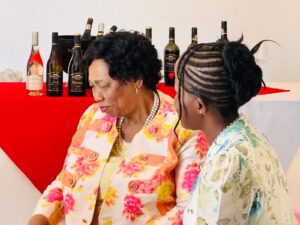
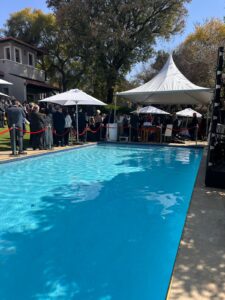
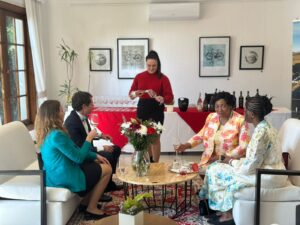
The celebration concluded with guests enjoying quintessential Swiss delicacies. They indulged in chocolate creations from Lindt master chocolatiers and savoured raclette, a traditional winter dish of melted cheese, reflecting Switzerland’s rich culinary heritage.
by Marion Kate