by Marion Smith
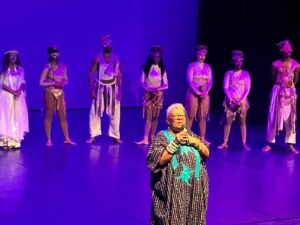
The spirit of Jamaica came alive in Johannesburg as the High Commission of Jamaica hosted a special cultural evening featuring the renowned Jamaican dance company The Company Dance Force, presenting 1 Love.
The event formed part of Jamaica’s 64th Independence celebrations and offered a vibrant evening of music, movement and storytelling, while highlighting the deep historical and cultural connections between Jamaica and South Africa.
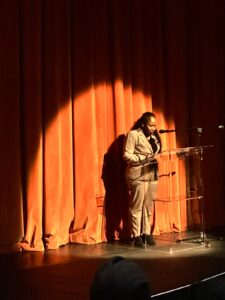
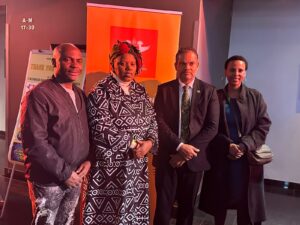
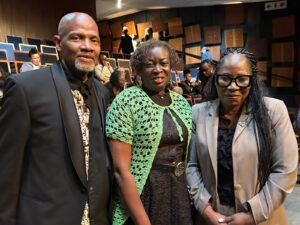
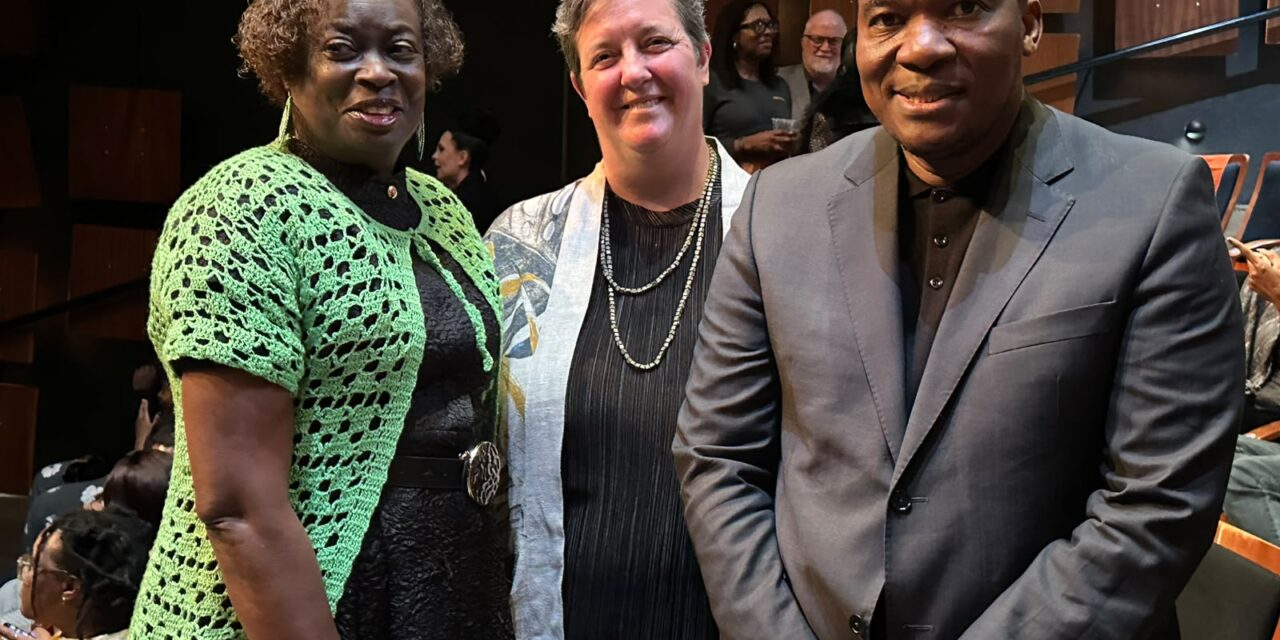
Welcoming guests, including Mr Nkhumeleni Victor Vele, Director-General of the Department of Tourism, members of the diplomatic corps and representatives of South African institutions, High Commissioner Joan Edwards said the High Commission had deliberately chosen a different approach to its independence celebrations this year.
“We decided to do things differently,” she explained, pointing to a programme that had included a sports day centred on sports diplomacy, a lecture and other activities before culminating in the dance performance.
“This evening is not only a celebration of Jamaican and Caribbean culture, but also a reflection and a testament to the enduring bonds between Jamaica and South Africa,” Edwards said.
Those bonds, she noted, are rooted in a shared history, struggles, culture and a common African heritage.
The visiting dancers had recently performed at JOMBA!, the international contemporary dance festival in Durban, where they enjoyed two successful performances before travelling to Johannesburg for the special presentation.
For Edwards, dance provided the perfect vehicle for cultural diplomacy.
She described the company as having carried Caribbean movement, rhythm and storytelling to audiences around the world for decades, “building bridges between peoples and hearts”.
A relationship beyond diplomacy
Jamaica and South Africa formally established diplomatic relations in 1994, but Edwards emphasised that the relationship between the two peoples stretches far beyond formal diplomatic ties.
Jamaica’s support for the struggle against apartheid and South Africa’s journey towards democracy remain important chapters in their shared history.
Today, the relationship continues to grow across political, economic, educational and cultural spheres, as well as through people-to-people exchanges.
“It is through these people-to-people connections that the relationship between our two countries acquires its warmth, its character and its enduring strength,” she said.
Edwards also reflected on recent official engagement between the two countries, including South African participation in Jamaica’s 64th Independence celebrations.
She described the participation as a meaningful demonstration of the warmth of the bilateral relationship and the two countries’ commitment to deeper engagement.
Africa and the Caribbean: connected by heritage
The timing of the dance presentation was particularly significant, taking place just a day after the commemoration of Africa Caribbean Heritage Month.
Edwards referred to Jamaica’s commitment to its identity as part of Africa’s “Sixth Region” and highlighted the importance of giving modern expression to ancestral links through deeper cooperation and stronger people-to-people ties.
Although the Atlantic Ocean separates Africa and the Caribbean geographically, she said, it has never severed the cultural and ancestral connections between the two regions.
Those connections live on through music, traditions, language, spirituality and collective memory.
The evening’s programme brought many of these influences to life, exploring African spiritual and cultural influences within the Caribbean experience, celebrating Black identity and achievement, and using rhythm and movement to tell stories passed down through generations.
For Edwards, the performance demonstrated that culture is one of the most powerful expressions of shared history.
“Through music, dance, language and storytelling, we preserve the experiences of those who came before us, while giving them new meaning for future generations,” she said.
From shared history to a shared future
The High Commissioner also used the occasion to acknowledge the many partners who helped bring the production to South Africa, including the Jamaican High Commission team, South African partners, the University of Johannesburg and JOMBA!, as well as tourism and cultural partners and sponsors.
Their involvement, she said, demonstrated the important role that cultural diplomacy can play in strengthening relations between countries.
But the evening was about more than looking back.
“As we celebrate our shared heritage, it is also important to recognise that these connections are a responsibility,” Edwards said. “The Caribbean relationship is not simply about looking back at where we have come from. It is also about determining where we go from here.”
She posed a question that captured the essence of the evening: “How do we transform a shared history into a shared future?”
The answer, perhaps, could be found on the dance floor.
Through movement, music and storytelling, the performers demonstrated that the bridges connecting Africa and the Caribbean already exist.
“We simply have to keep walking across them,” Edwards said.
As the evening drew to a close, the High Commissioner thanked the performers, partners, sponsors and guests for joining the celebration.
Her hope was that everyone would leave with “a little more Jamaica in their spirits” and, most importantly, “a little more One Love in your heart”.
It was a fitting conclusion to an evening where diplomacy stepped away from the conference room and found its rhythm through culture, dance and the enduring bonds between Jamaica and South Africa.