by Marion Kate
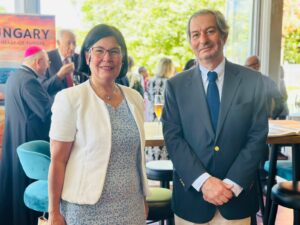
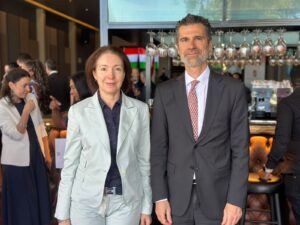
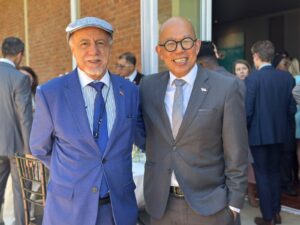
The 70th anniversary of the Hungarian Revolution and Freedom Fight of 1956 brought diplomats, dignitaries and guests together at Pretoria Country Club to honour the courage of those who fought for freedom and celebrate the enduring relationship between Hungary and South Africa.
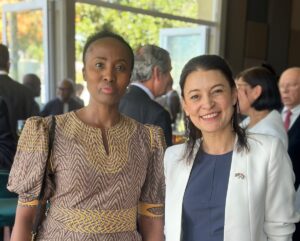
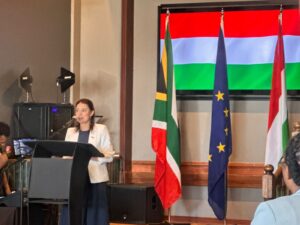
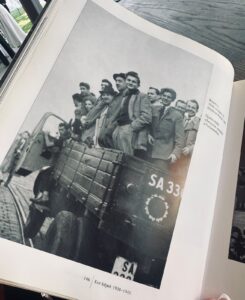
Hosted by Hungary’s Chargé d’Affaires, Ms Dóra Kövendi, the commemorative event reflected on the historic events of October 1956, when Hungarians rose against oppression, demanding freedom, democracy and national independence.
The occasion also highlighted the historical parallels between Hungary’s struggle for democracy and South Africa’s own journey towards liberation, underscoring the shared values that have shaped relations between the two countries.
The programme opened with the national anthems of Hungary and South Africa, setting a tone of respect and remembrance.
Addressing the gathering, Kövendi described the 1956 revolution as a defining moment when ordinary citizens found the courage to speak out against oppression and reclaim their moral freedom.
In October 1956, protests led by university students in Budapest grew into a nationwide uprising. Thousands lost their lives, tens of thousands were arrested, and approximately 200,000 Hungarians fled the country in the aftermath.
“On this anniversary, we do not remember the tragedies first. Above all, we remember something more elemental: the experience of a nation reclaiming its moral clarity,” she said.
Kövendi emphasised that the anniversary serves as an annual reminder that freedom, tolerance and democracy cannot be taken for granted.
She called for solidarity with minorities, vulnerable communities and the oppressed, arguing that the lessons of 1956 remain relevant in a world where fundamental freedoms continue to face challenges.
Two Nations United by the Pursuit of Freedom
Drawing parallels between the histories of Hungary and South Africa, Kövendi noted that both countries experienced defining moments of resistance in 1956.
In August of that year, approximately 20,000 women marched to South Africa’s Union Buildings in Pretoria to protest against the extension of pass laws to women. The demonstration became an important milestone in the country’s liberation struggle.
She also recalled the arrests of anti-apartheid activists in December 1956 during the Treason Trial, while highlighting the role of young people in challenging injustice in both countries. Hungary’s student uprising in 1956 and South Africa’s student resistance, including the Soweto uprising of 1976, demonstrated the power of young people in demanding change.
The relationship between the two nations also carries a history of humanitarian solidarity. Following the Hungarian Revolution, South Africa received Hungarian refugees, many of whom arrived in 1957 and went on to establish new lives, families and businesses.
The transition to democracy further strengthened the historical connection. Hungary proclaimed the Republic of Hungary on 23 October 1989, while South Africa embarked on its decisive democratic transition following the unbanning of liberation movements in 1990. South Africa held its first democratic elections in April 1994.
Both nations ultimately pursued political transformation through negotiation and constitutional processes, rather than allowing their futures to be defined by revenge.
Hungary and South Africa established full diplomatic relations in July 1991, building a partnership rooted in their respective experiences of political change.
Strengthening Economic and Educational Cooperation
Beyond the historical significance of the anniversary, Kövendi highlighted the growing economic relationship between the two countries.
South Africa remains an important economic partner for Hungary in sub-Saharan Africa, with opportunities for further collaboration in water management, agriculture, food processing, medical technology, automotive components and digital solutions.
She noted that cooperation between businesses could contribute to local job creation, knowledge transfer and South Africa’s development priorities.
Education remains another important pillar of the relationship. Through Hungary’s Stipendium Hungaricum scholarship programme, South African students have the opportunity to pursue higher education at Hungarian universities, helping to develop skills and build lasting connections between the two nations.
Kövendi also highlighted Hungary’s position within the European Union, noting the opportunities this creates for international trade, investment and cooperation with African partners.
She reaffirmed the embassy’s commitment to supporting Hungarian and South African businesses interested in exploring opportunities in each other’s markets.
South Africa Reaffirms Its Commitment to Partnership
Representing the South African government, Phumzile Mazibuko of the Department of International Relations and Cooperation (DIRCO) congratulated the government and people of Hungary on the anniversary.
She described the relationship between the two countries as one founded on mutual respect, shared values and a common commitment to international peace and sustainable development.
Mazibuko said that, although political relations remained strong, considerable untapped potential existed in bilateral economic cooperation.
She identified opportunities for Hungarian investment in South Africa, particularly in manufacturing, automotive production, pharmaceuticals, information technology, water management and renewable energy.
South Africa’s position as a gateway to the African continent, supported by the African Continental Free Trade Area, offers Hungarian companies an opportunity to expand their reach into African markets.
Mazibuko also stressed the importance of strengthening cooperation in water and sanitation. A memorandum of understanding signed in 2017 provides a framework for collaboration, with further opportunities for joint projects, technical exchanges and capacity-building initiatives.
Science and technology cooperation could similarly support joint research in areas such as artificial intelligence, biotechnology, renewable energy and agricultural innovation.
Education featured prominently in her address, with Mazibuko acknowledging the impact of the Stipendium Hungaricum scholarship programme.
She expressed appreciation for Hungary’s continued support, highlighting the programme’s contribution to developing South African skills and fostering lasting friendships between the two peoples. She also expressed hope that discussions on renewing the programme would enable more South African students, particularly at master’s and doctoral levels, to benefit.
Cultural and sporting exchanges were recognised as equally important in bringing the countries closer. Mazibuko referred to the reception of a jazz adaptation of the South African novel Disgrace in Budapest and South African athletes’ participation in the inaugural World Athletics Ultimate Championship held in the Hungarian capital in September.
These exchanges, she noted, demonstrate that diplomacy extends beyond government relations to encompass shared culture, human connections and mutual understanding.
As the event drew to a close, glasses were raised in a toast to continued prosperity, enduring friendship and a strengthened partnership between Hungary and South Africa.
Seventy years after the Hungarian Revolution, the anniversary served as a reminder that the pursuit of freedom can unite nations across continents, while shared history can provide a foundation for cooperation, understanding and a more prosperous future.