by Marion Smith
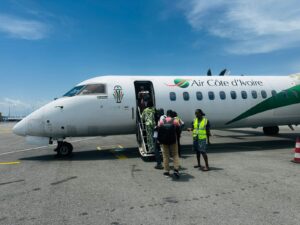
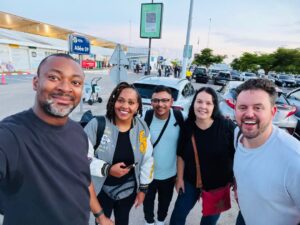
Landing in Abidjan with an air of excitement, our journey into Côte d’Ivoire began with anticipation and curiosity as we travelled to the West African nation during Africa Month. There seemed no better time to explore a country so rich in culture, heritage and resilience than in May, a month dedicated to celebrating the African continent and reflecting on its progress and identity.
The Embassy of Côte d’Ivoire in Pretoria had carefully compiled an itinerary that would offer us insight into the country’s many regions, cultures and communities. From bustling cities and historic landmarks to agricultural heartlands and cultural centres, the trip promised to reveal different dimensions of the nation. Ambassador Kone, together with Ahmed Soro, Tourism Attaché at the embassy, ensured that we were not merely visitors but fully immersed participants in Ivorian hospitality and traditions.
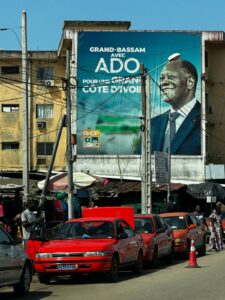
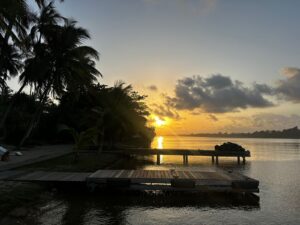
One of the highlights of the journey was visiting Grand Bassam, undoubtedly one of my favourite cities in Côte d’Ivoire. The Mayor’s Office, under the guidance of the Deputy Mayor and dedicated staff, spent the day introducing us to the UNESCO World Heritage city and its fascinating past. The experience went beyond sightseeing; it became an opportunity to connect with history and local culture.
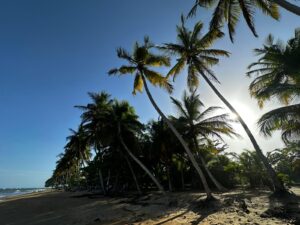
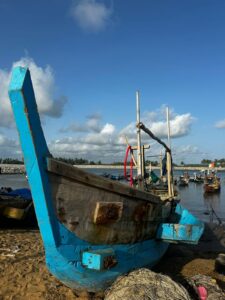
Our day included cultural activities, beachfront meals and long walks beneath streets lined with magnificent century old mango trees. Fish freshly prepared on the beachfront while waves rolled onto the shore created one of those unforgettable travel moments where time seems to slow down.
Jean Louis Moulot, Mayor of Grand Bassam, described the city with immense pride:
“The city of Grand Bassam, the first municipality of our country, the first capital of Côte d’Ivoire, a city registered on the UNESCO World Heritage List, is proud of its past, of its abundant cultural heritage which is a symbol for Côte d’Ivoire today. In light of these assets, such as tourism, education, science and technology, Grand Bassam is optimistically heading for the future.”
His words felt reflected in every street and building around us.
Grand Bassam was once Côte d’Ivoire’s port and legal capital and served as a major economic powerhouse during the era of French colonial expansion in the Gulf of Guinea. It attracted people from across Africa, Europe and the Mediterranean Levant, creating a city shaped by many influences.
The streets are lined with historic buildings, each carrying stories from another era. Among them stands a house originally built in 1920 by a native of the Gold Coast, present day Ghana, before later being acquired and transformed by prominent Lebanese Syrian merchant Mr Ganamet.
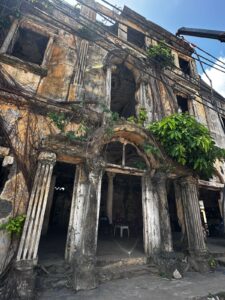
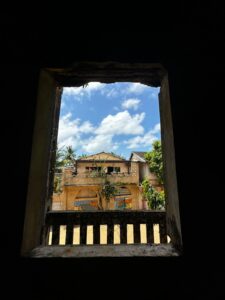
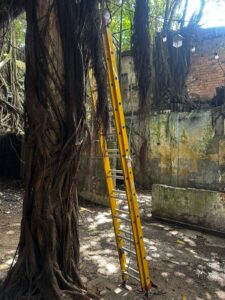
Nearby sits the former Hotel de France, built in 1900 and regarded as one of the area’s earliest luxury hotels with its three suites. Today, it is a photographer’s dream. Trees grow from cracks and crevices in the weathered walls, stretching towards sunlight while roots spill dramatically over the structure. Across the road stands the former Bank of the African Colony, another reminder of Grand Bassam’s economic significance.
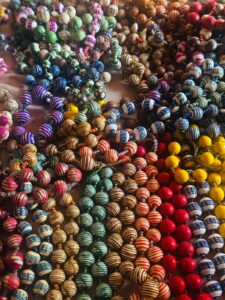
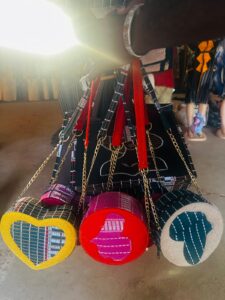
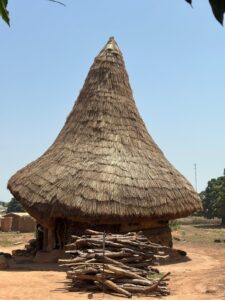
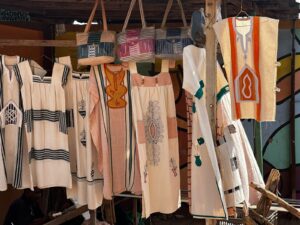
Just before entering the city lies another extraordinary attraction: West Africa’s largest artisan village. Several hundred huts, workshops and stores, numbering close to 400 and supporting approximately 2,000 artisans, apprentices and retailers, showcase the very best of Ivorian craftsmanship. It is a place where art and tradition meet commerce, preserving centuries of skills while supporting livelihoods.
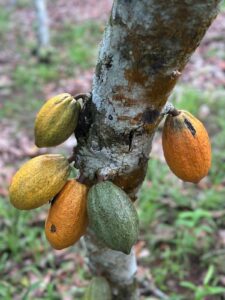
Another unforgettable experience took us to San Pedro to visit a cocoa plantation. The visit offered insight into an industry that forms the backbone of Côte d’Ivoire’s economy.
Before reaching the cocoa fields, we experienced an extraordinary welcome ceremony from the local community. We were greeted with kola nuts, fiery spices and palm wine before beginning our walk towards the plantations. Passing through rubber fields and eventually arriving beneath the shade of cocoa trees, we quickly discovered the realities of life in this environment.
Despite standing beneath dense canopies, the heat and humidity were almost indescribable.
Côte d’Ivoire remains the world’s largest producer and exporter of cocoa and is responsible for a substantial portion of global cocoa production. The industry supports millions of livelihoods and remains central to the country’s economy. Yet beyond statistics and exports, standing among the cocoa trees creates appreciation for the labour, environment and communities behind every chocolate bar consumed around the world.
Travelling further north to Korhogo revealed another side of the country’s economy and culture.
Visiting the women led shea butter cooperative in the Petit Paris 2 district became one of the most inspiring moments of the trip. The Tcheregnimin Women’s Cooperative, consisting of 146 women, has operated since 2002 and today stands as a remarkable example of community driven economic empowerment.
With support from development organisations, the cooperative has expanded significantly and now includes modern facilities such as grinding mills, stoves, ovens, storage spaces and administrative offices.
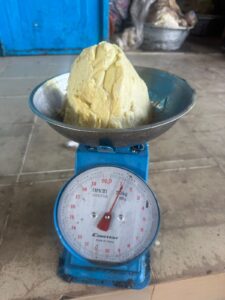
Shea butter production itself is a fascinating process. Harvesting begins during May and June, when women gather the fruit and process the nuts through several stages over approximately six days. Weekly production reportedly reaches around 40 tonnes of butter.
Walking through the facility and learning about the process was eye opening. Before leaving, many of us purchased shea butter to take home. At around R45 per kilogram, we were astonished both by its affordability and remarkable quality.
Africa Month, observed throughout May, commemorates the founding of the Organisation of African Unity, now the African Union, and celebrates Africa’s diverse cultures, histories and achievements. Visiting Côte d’Ivoire during this period felt especially meaningful.
We experienced cultural festivals showcasing African cuisine, music, art and fashion, while heritage celebrations such as the captivating Panther Dance in Korhogo offered a glimpse into traditions that continue to thrive.
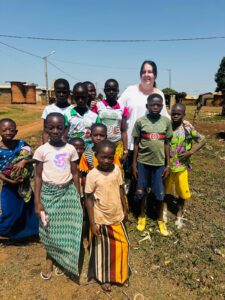
Each visit to Côte d’Ivoire leaves me with a full heart and deep gratitude. Beyond the landscapes and landmarks, it is the warmth of the people, their pride in culture and their optimism for the future that stays with me long after departure.
As Africa Month reminds us to celebrate our continent, I left Côte d’Ivoire with one thought: perhaps Africa Month should not be limited to one month at all. Perhaps it should be every month.