by Marion Smith
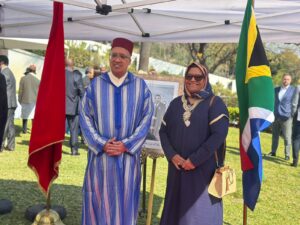
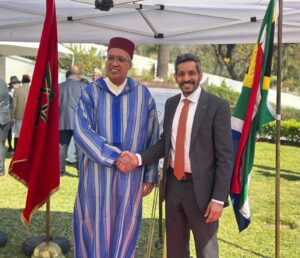
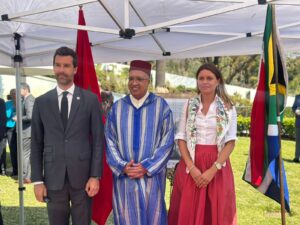
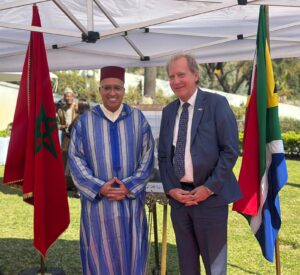
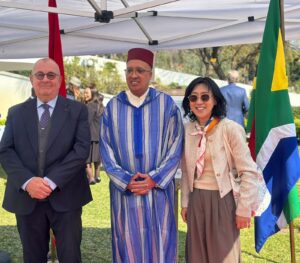
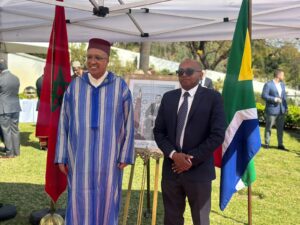
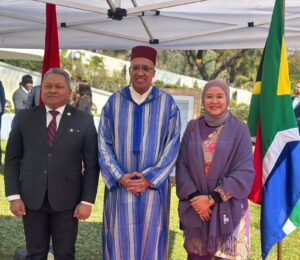
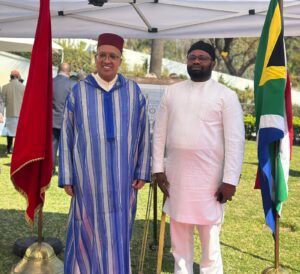
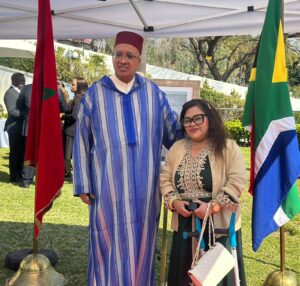
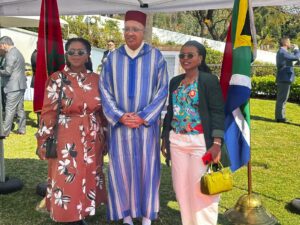
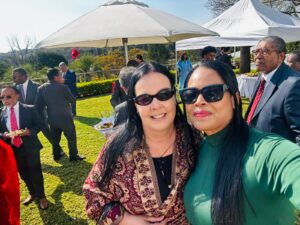
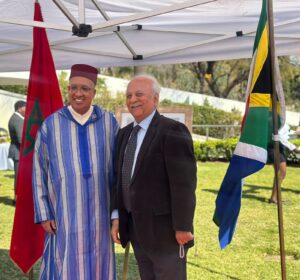
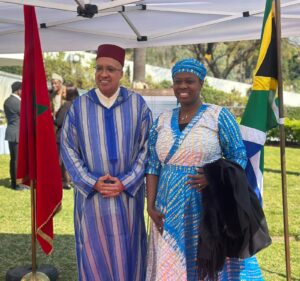
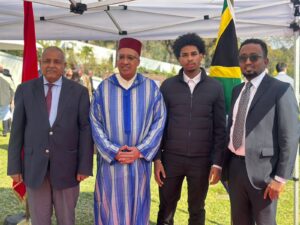
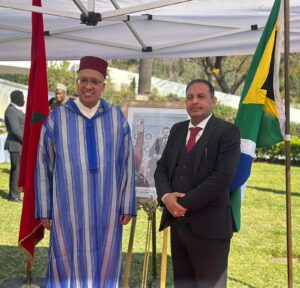
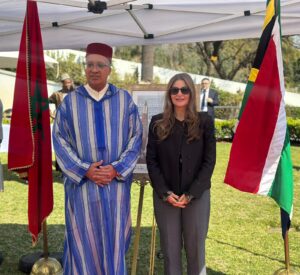
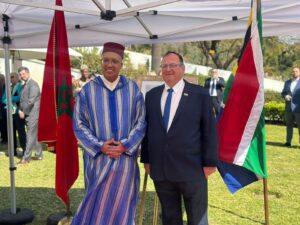
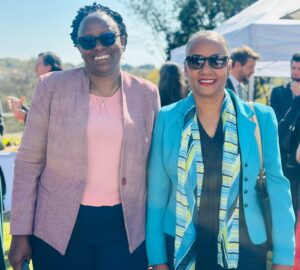
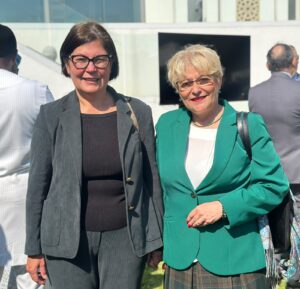
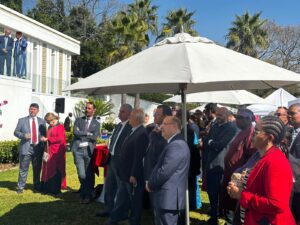
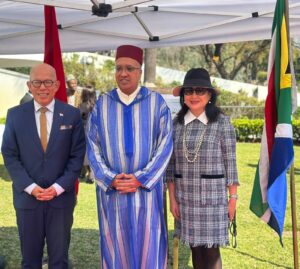
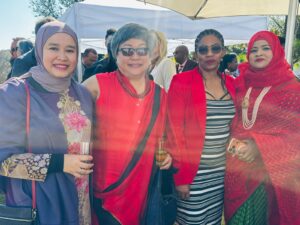
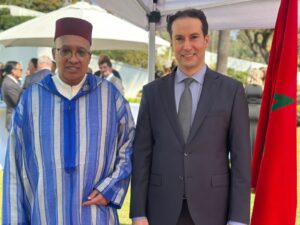
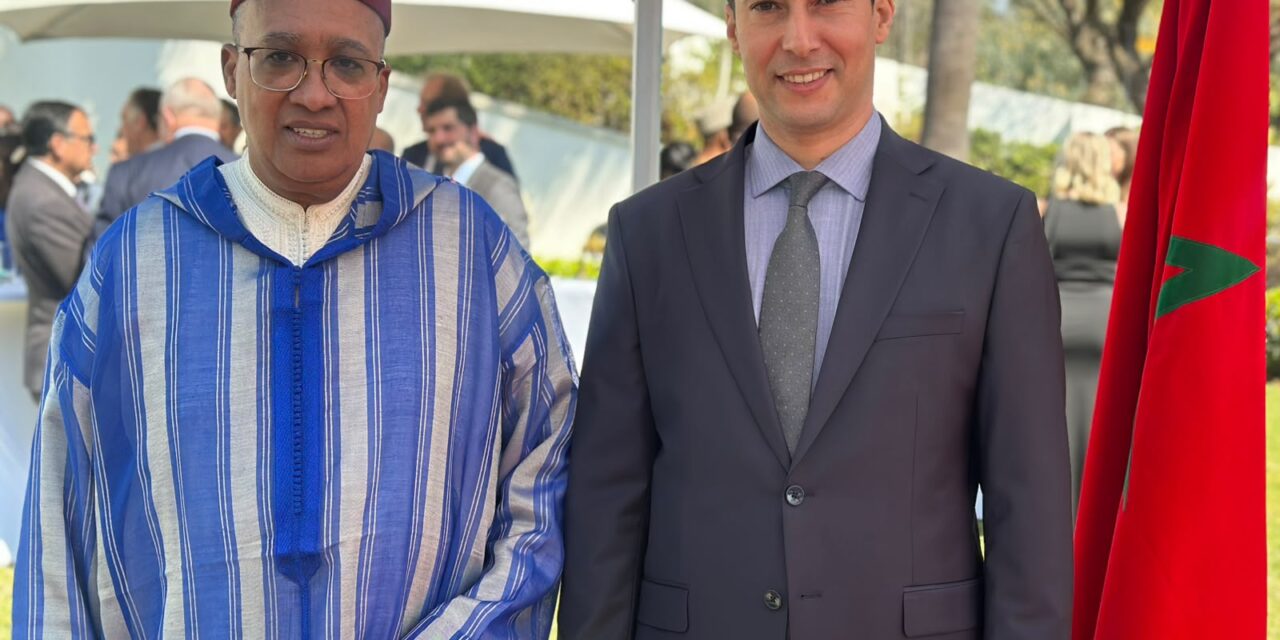
The Embassy of the Kingdom of Morocco commemorated the 27th Anniversary of the Enthronement of His Majesty King Mohammed VI with a distinguished reception at the residence of the Chargé d’Affaires in Pretoria. The occasion brought together ambassadors, members of the diplomatic corps, South African government representatives, business leaders, members of the Moroccan community and invited guests.
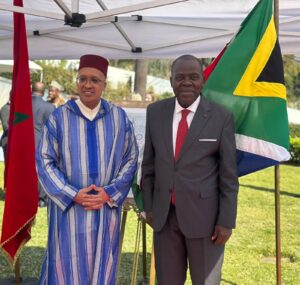
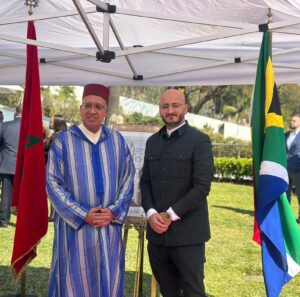
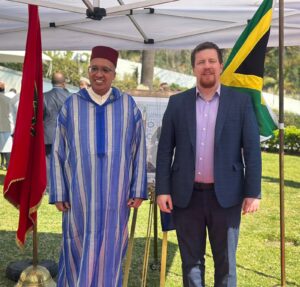
Hosting the afternoon, Head of Mission Mohammed Saadaoul welcomed guests and reflected on nearly three decades of transformative leadership under King Mohammed VI, highlighting Morocco’s economic growth, infrastructure development, renewable energy ambitions and expanding role as a bridge between Africa and Europe.
Mr Saadaoul described the anniversary as an opportunity to celebrate Morocco’s achievements while reaffirming the Kingdom’s commitment to peace, sustainable development, regional solidarity and international cooperation.
He noted that despite global geopolitical and economic uncertainty, Morocco has demonstrated resilience through macroeconomic policies, structural reforms and sustained public investment. These efforts have strengthened the country’s position as an important investment destination on the African continent.
Today, Morocco has established itself as a strategic gateway connecting Africa, Europe and the wider international community, offering investors a diversified and forward-looking economy. Mr Saadaoul highlighted the Kingdom’s growing renewable energy sector, pointing to major investments in solar, wind and green hydrogen.
He explained that Morocco’s Green Hydrogen Initiative has attracted significant international interest, reinforcing the country’s ambition to become a clean energy hub linking Africa and Europe.
Infrastructure development also featured prominently in his address. Mr Saadaoul referred to the continued expansion of Morocco’s high-speed rail network towards Marrakech and the development of the Nador West Med Port, projects aimed at strengthening Morocco’s position as a logistics, industrial and maritime hub.
One of the Kingdom’s flagship continental initiatives is the Nigeria-Morocco Atlantic Gas Pipeline, championed by King Mohammed VI. The project is expected to connect Nigeria to Morocco along Africa’s Atlantic coast, with the aim of improving energy security, supporting industrial development and promoting greater regional economic integration across several West African countries.
Mr Saadaoul also highlighted Morocco’s growing international profile, noting the successful hosting of major continental events and preparations for the 2030 FIFA World Cup, which Morocco will co-host with Spain and Portugal. He described the tournament as a symbol of cooperation between Africa and Europe and an opportunity to showcase Morocco’s infrastructure and organisational capabilities.
Tourism also continues to play an increasingly important role in Morocco’s economy, attracting millions of international visitors and strengthening the country’s position as one of Africa’s leading tourism destinations.
Turning to foreign policy, Mr Saadaoul reaffirmed Morocco’s commitment to the African continent through partnerships based on mutual respect and shared prosperity. He emphasised the potential for stronger cooperation between Morocco and South Africa in areas including trade, renewable energy, agriculture, tourism, digital innovation and industrial development.
“As two influential African nations,” he said, “Morocco and South Africa have both the responsibility and the opportunity to work together in addressing the challenges facing our continent.”
He stressed that stronger dialogue between the two countries could contribute to the African Union’s Agenda 2063 while strengthening Africa’s voice on the global stage.
Paying tribute to the Moroccan community living in South Africa, Mr Saadaoul praised their dedication, professionalism and commitment to representing their homeland with dignity.
“You are a source of pride for Morocco and a bridge of friendship and understanding between our two countries,” he told members of the diaspora.
He also thanked the Embassy’s diplomatic, administrative and locally recruited staff for their professionalism and commitment over the past year.
Representing the South African Government, Ambassador André Groenewald, Director for Diplomatic Training and the International School, congratulated Morocco on the national celebration and acknowledged the Kingdom’s progress under King Mohammed VI’s leadership.
He described Morocco as an important partner for South Africa in advancing Africa’s development agenda and strengthening continental cooperation under the African Union’s Agenda 2063.
Ambassador Groenewald highlighted growing opportunities for bilateral cooperation in trade, education, science, technology, culture, tourism and sport.
He pointed to Morocco’s economic growth, noting that the country’s Gross Domestic Product has increased from approximately US$42 billion in 2000 to more than US$182 billion in 2025.
The Ambassador also highlighted the automotive sector as an area of shared strength. Morocco has developed into a major automotive manufacturing hub, while South Africa maintains one of the continent’s most established automotive industries. He called for stronger regional supply chains to ensure that more automotive components are manufactured within Africa and traded across the continent under the African Continental Free Trade Area (AfCFTA).
Renewable energy presents another significant opportunity for collaboration, he said, with both countries pursuing ambitious programmes in clean energy and green hydrogen.
Ambassador Groenewald encouraged greater Moroccan investment in South Africa while acknowledging the presence of South African companies operating in Morocco. He urged both countries to expand bilateral trade and investment and maximise the opportunities created by the AfCFTA.
Turning to sport, he congratulated Morocco on hosting the Women’s Africa Cup of Nations and praised the achievements of the Moroccan national football team on the international stage.
Looking ahead to the 2030 FIFA World Cup, he expressed optimism that the tournament would deepen people-to-people ties through tourism, education, business and cultural exchange.
Concluding his address, Ambassador Groenewald extended South Africa’s congratulations to King Mohammed VI and the Government and people of Morocco, reaffirming South Africa’s commitment to strengthening friendship and expanding cooperation between the two nations.
The afternoon reflected not only Morocco’s national pride and achievements over the past 27 years, but also the potential for a stronger relationship between Morocco and South Africa. With both countries looking towards greater African integration, sustainable development and expanded economic cooperation, the celebration provided an opportunity to recognise their shared aspirations for the continent’s future.