by Marion Smith
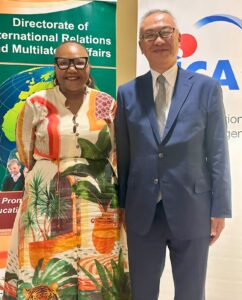
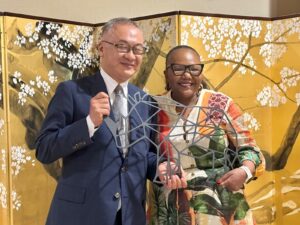
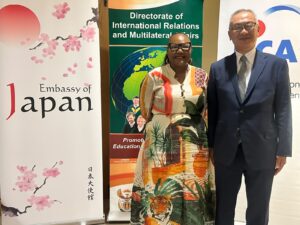
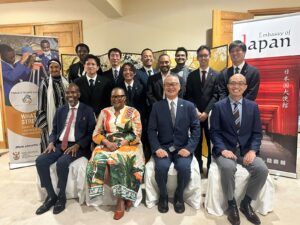
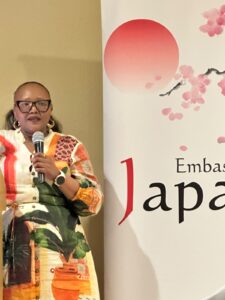
The Minister of Basic Education, Siviwe Gwarube, joined Japan’s Ambassador to South Africa, Fumio Shimizu, at the Japanese Ambassador’s official residence for an engagement celebrating the contribution of Japan’s Overseas Cooperation Volunteers (JOCVs) to South Africa’s education and skills development sector.
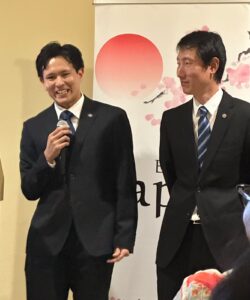
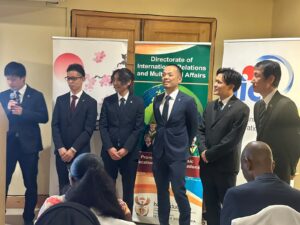
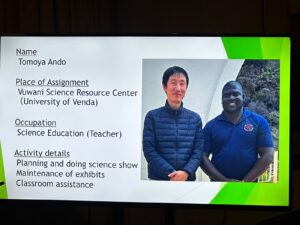
The engagement was also attended by Deputy Minister of Basic Education Dr Reginah Mhaule, representatives of the Japan International Cooperation Agency (JICA) and six JOCVs currently serving in South Africa.
Since the JOCV programme began in South Africa in 2002, 143 volunteers and 24 Senior Volunteers have served communities across the country. Seven volunteers are currently working in Limpopo and Mpumalanga, supporting initiatives that include mathematics and science education, vocational training, disability support and sports development.
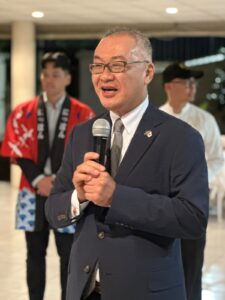
Ambassador Shimizu described the programme as a grassroots form of development cooperation, noting that while large-scale projects may attract greater visibility, the day-to-day work of volunteers can have a lasting impact on individual learners and communities.
He highlighted the volunteers’ work alongside schools, local communities and disability centres, saying their contribution extends beyond education to building greater inclusion and understanding.
“The dispatch of JOCVs is a small-scale, steady and grassroots undertaking,” Shimizu said, emphasising that its value lies in the relationships and trust developed at community level.
The Ambassador also stressed that the partnership is not one-directional. Japanese volunteers spend extended periods living and working within South African communities, gaining experience that they can take back to Japan.
He said these returning volunteers could continue to serve as bridges between the two countries by sharing their South African experiences and contributing to deeper people-to-people understanding.
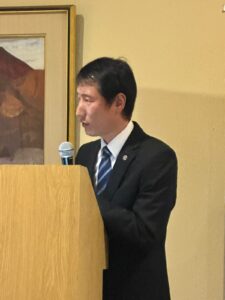
Addressing the gathering, Minister Gwarube said the partnership reflected a shared commitment to human capital development and sustainable development through strong institutions and meaningful cooperation.
She outlined South Africa’s efforts to strengthen the foundations of its education system, with particular emphasis on foundational literacy and numeracy, as well as expanding early childhood development.
Mathematics, science and technology were also identified as important areas for future economic opportunity. Gwarube noted that the department is investing in the development of 10,000 foundation-phase teachers, with a focus on foundational literacy and numeracy.
She credited cooperation with Japan and JICA with strengthening mathematics education through technical expertise, teacher development and support.
Gwarube thanked Japan on behalf of South Africa’s education sector, including its approximately 13.7 million learners and half a million teachers, for its contribution.
She also connected education cooperation with broader bilateral economic relations, noting the presence of Japanese manufacturers in South Africa and their contribution to industrial development and employment.
For Gwarube, the significance of the partnership ultimately lies in expanding opportunities for children who depend on the public education system.
She said investments in education could help create opportunities that change the trajectory of families, enabling children to become the first engineers, doctors and professionals in their households.
The evening concluded with recognition of the JOCVs and their commitment to serving South African communities, while reaffirming the longstanding friendship between Japan and South Africa.
The engagement demonstrated how cooperation at community level can complement broader diplomatic and economic ties, with education remaining an important foundation for the relationship between the two countries.